
Custom Cable Tap Boxes
What are Cable Tap Boxes?
Cable tap boxes serve as centralized distribution points, allowing for the efficient routing of electrical power to multiple circuits or loads. They are particularly useful in settings where space optimization and streamlined power distribution are critical. By consolidating wiring and reducing the need for extensive conduit runs, cable tap boxes offer a practical solution for complex electrical systems.
Have a busduct burn-up? Give us a call to meet you at your project, we can make all necessary field measurements and have your replacement buss duct ready in no time.
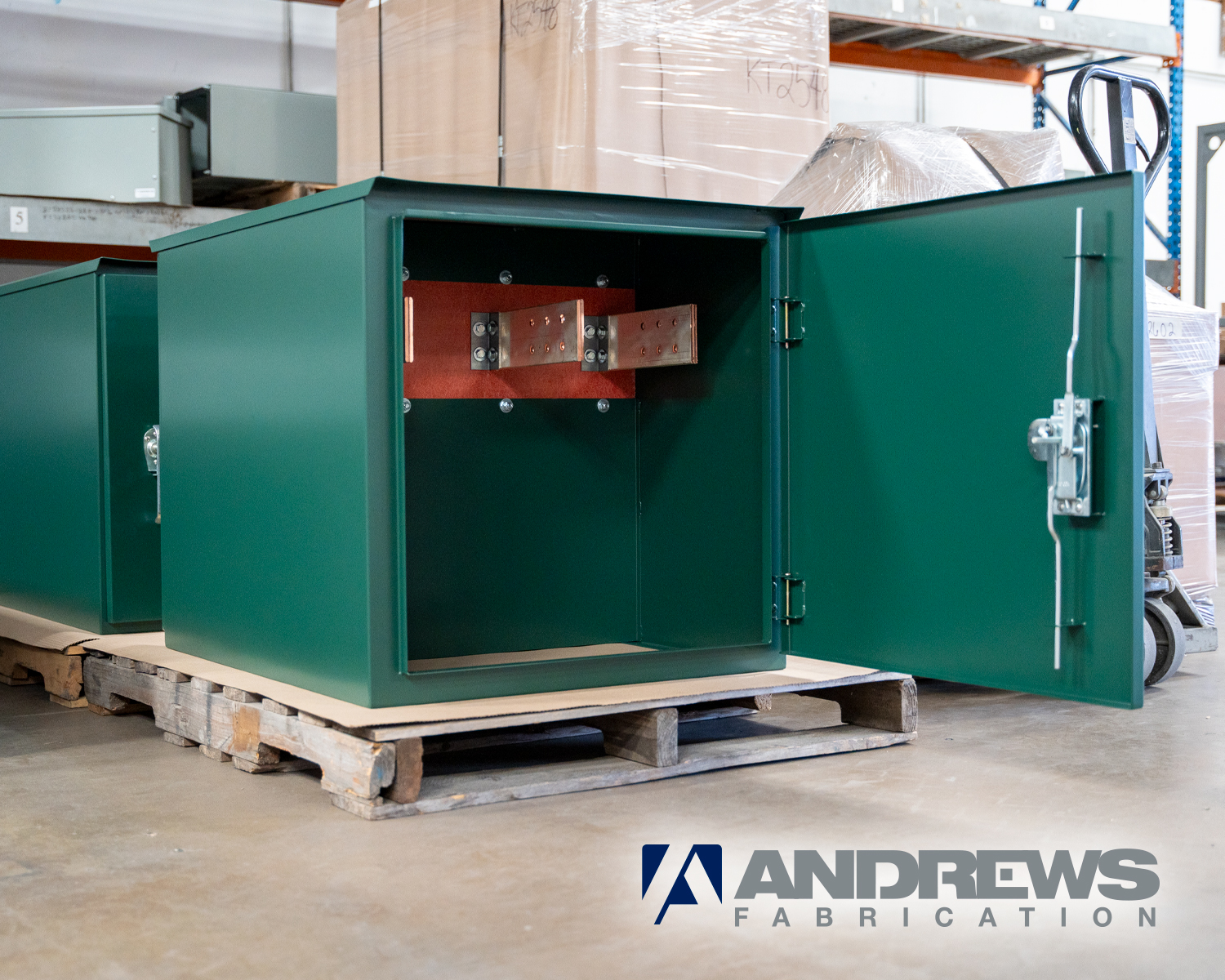
Pad-Mount Cable Tap Boxes
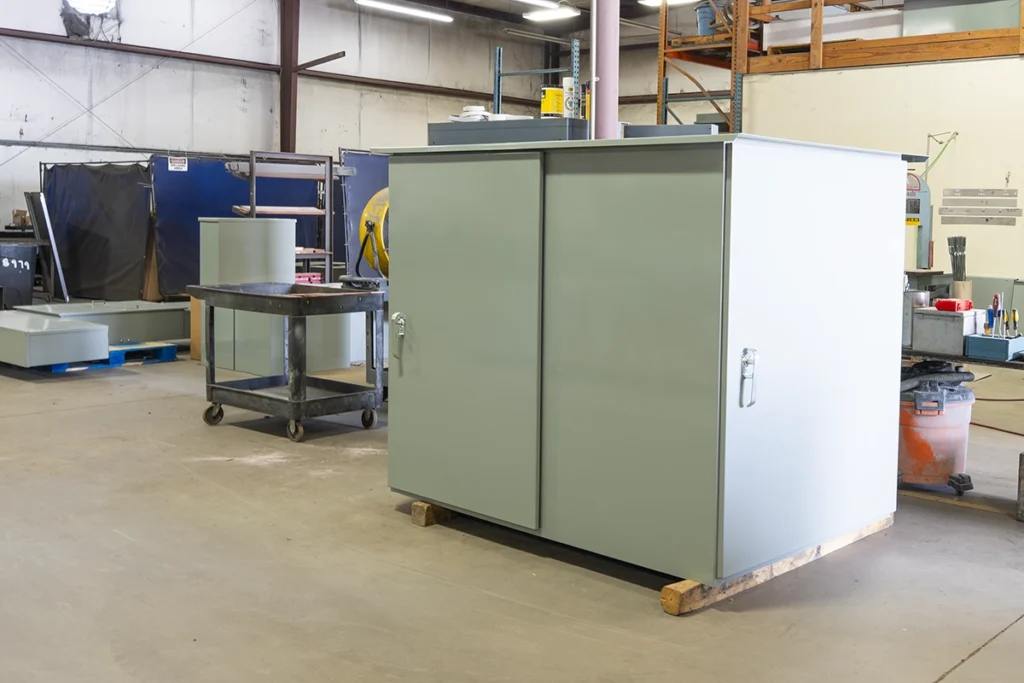
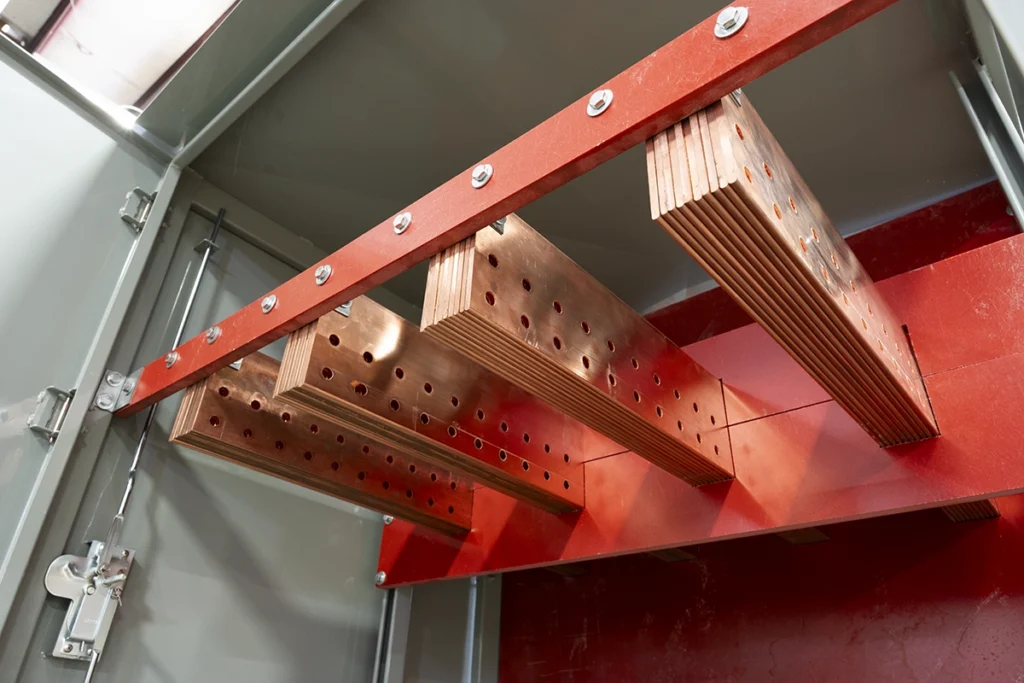
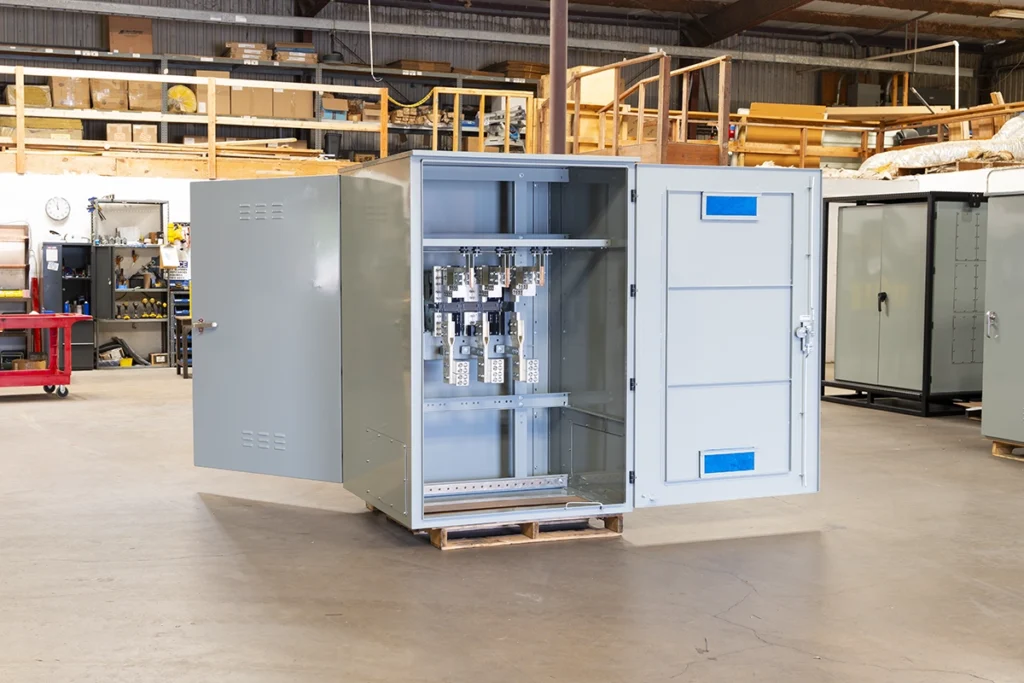
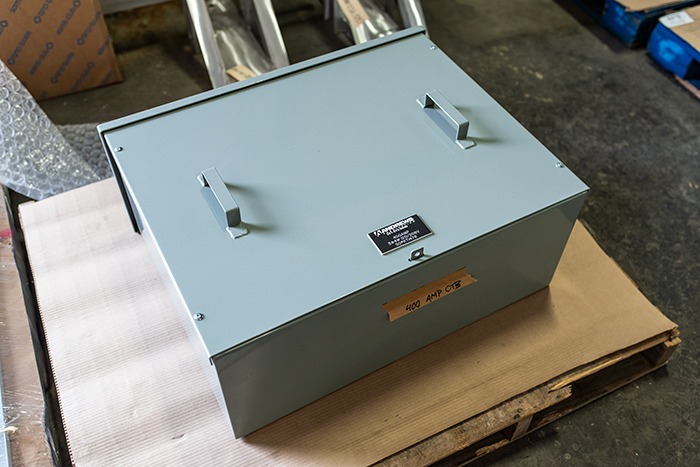
Wall Mount Cable Tap Boxes
Providing Safe and Organized Electrical Connections
Wall mounted cable tap boxes are crucial components in various electrical systems, offering a safe and organized enclosure for cable connections. They serve numerous purposes, from facilitating power distribution to enabling temporary connections for generators.
Based on the Centerpoint Service Standards on section 419.5:
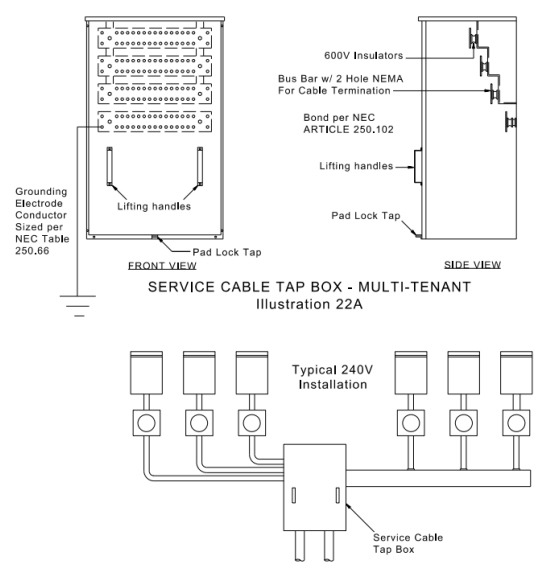
Service Cable Tap Box – Multi-Tenant Services: In Multiple-Tenant buildings where additional services are likely, a bus conductor service cable tap box may be required similar to Illustration 22A, (see below). A Multiple occupancy service usually requires that Service Conductors be in a sealable weather-tight wiring tap box similar to Illustration 22B(see below).
Custom Fabrication to Your Specifications
Understanding that each project has unique requirements, we offer cable tap boxes in a variety of configurations.
Ampacity Range: From 2,000 to 10,000 amps, accommodating various power distribution needs.
Materials: Options include cold galvanized steel, powder-coated mild steel, and stainless steel, selected based on environmental conditions and durability requirements.
Design Features: Enclosures can be designed for indoor or outdoor use, with considerations for termination space and accessibility.
Cover Options: Choose from screw-on, hinged, or locking covers to suit security and maintenance preferences.
Our experienced fabricators work closely with clients to ensure that each cable tap box meets the specific demands of their application.
From the Point of Delivery, Service Conductors must enter directly into the Service Cable Tap Box. Service Entrance Conductor line taps shall be made in the Tap Box by the electrical contractor. Service Conductor extensions or taps(daisy chain) are prohibited from the Tap Box. For three phase service fed from a multi-tenant line gutter, the electrical contractor is responsible for providing and maintaining A-B-C clockwise rotation to the line side of the self-contained meter mounting device. Accepted grounding and bonding practices for multi-meter installations are shown in Illustration 21(page 56). In addition, the customer is responsible for bonding the Service Tap Box per NEC Table 250.102(C)(1).
Understanding Cable Tap Boxes:
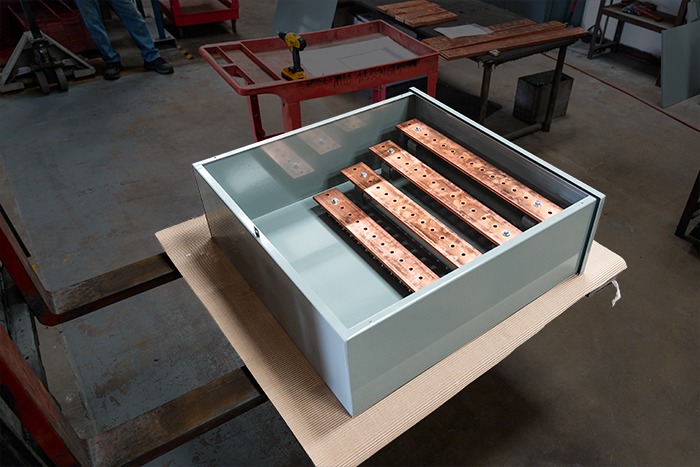
These boxes are essentially enclosures, typically made of sheet metal, designed to house cable terminations and connections. They come in various sizes and configurations to accommodate different applications and the number of cables involved.
Key Features and Benefits:
- Safety: Cable tap boxes protect electrical connections from accidental contact, dust, moisture, and other environmental hazards. This is especially important in areas prone to harsh conditions or where accidental contact with live wires poses a risk.
- Organization: By enclosing and separating cables within the box, tap boxes promote better organization and labeling, simplifying future maintenance and troubleshooting. This is particularly advantageous in complex electrical systems with numerous branching cables.
- Accessibility: Most tap boxes feature hinged doors or removable covers for easy access to the enclosed connections. This facilitates inspection, maintenance, and modifications when needed.
- Durability: Depending on the material and NEMA rating, cable tap boxes can withstand various environmental conditions, ensuring long-lasting performance.
Applications of Wall-Mounted Cable Tap Boxes:
- Power Distribution: In commercial and industrial settings, tap boxes serve as junction points for distributing power from main electrical panels to branch circuits.
- Communication Systems: They can also house cables and connections for communication systems, such as telephone lines and data cables.
- Generator Connections: These boxes provide a safe and secure connection point for portable generators during power outages or maintenance.
- Lighting Control Systems: Tap boxes house the necessary connections and components for controlling lighting circuits in buildings.
Choosing the Right Wall-Mount Cable Tap Box:
Selecting the appropriate wall-mount cable tap box requires considering several factors, including:
Amperage and voltage rating: The box must be compatible with the electrical load it will handle.
Number and size of cables: Ensure the box has sufficient space and appropriate knockouts for the cables being used.
Environmental conditions: Choose a NEMA-rated enclosure suitable for the intended location’s moisture and dust exposure.
By understanding the purpose, features, and selection criteria of wall mounted cable tap boxes, you can ensure safe, organized, and efficient electrical connections in various applications.